

3 Reasons Why Novartis Uses Netflix-like On-demand Hub to Engage Doctors
On May 3rd 2022, FiercePharma featured a story “Novartis' Netflix moment? Big Pharma launches a new on-demand video hub to boost digital engagement with doctors”.
The article features Novartis’ CEO, Novartis’ US Chief Marketing Officer, as well as Evermed - a company that Novartis teamed up with to build a “Netflix for doctors” (that’s us:)
As you can imagine, the article generated a lot of attention from pharma executives and life science agencies because it describes a new, modern way to engage HCPs on their own terms and drive business objectives.
In this article we’d like to share the 3 reasons why companies like Novartis use Netflix-like personalized on-demand video hubs to engage HCPs.
Before we do that, if you are a:
- Pharma executive looking for new ways to engage HCPs and patients, or you are an
- Agency executive looking for new ways to help your clients engage HCPs and patients
…click below to see if you are eligible for a Netflix-like solution.
Back to the story.
There are 3 reasons why companies like Novartis use Netflix-like on-demand video hubs to engage HCPs:
Reason #1: Pharma’s Access To Doctors Has Dropped 57% Year Over Year
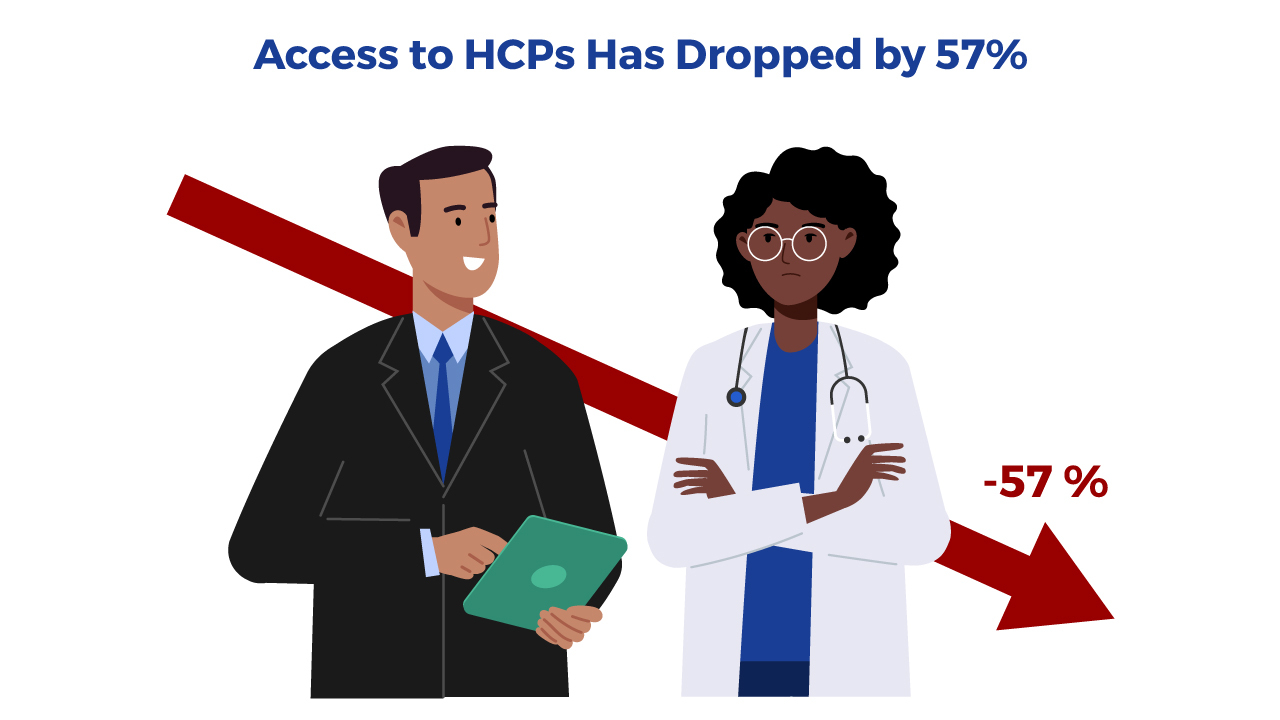
Doctors are simply closing their physical and virtual doors to pharma reps…
And when a business doesn’t have a way to even access their customers, it’s not a fun situation to be in. We are talking about failed product or indication launches, and inability to reach the investor forecasts.
To make things worse, other traditional channels such as emails, webinars, HCP portals and speaker programs are all losing their effectiveness due to lack of differentiation.
Reason #2: HCPs’ Product Adoption Journey Is Now Driven By (On-Demand) Content
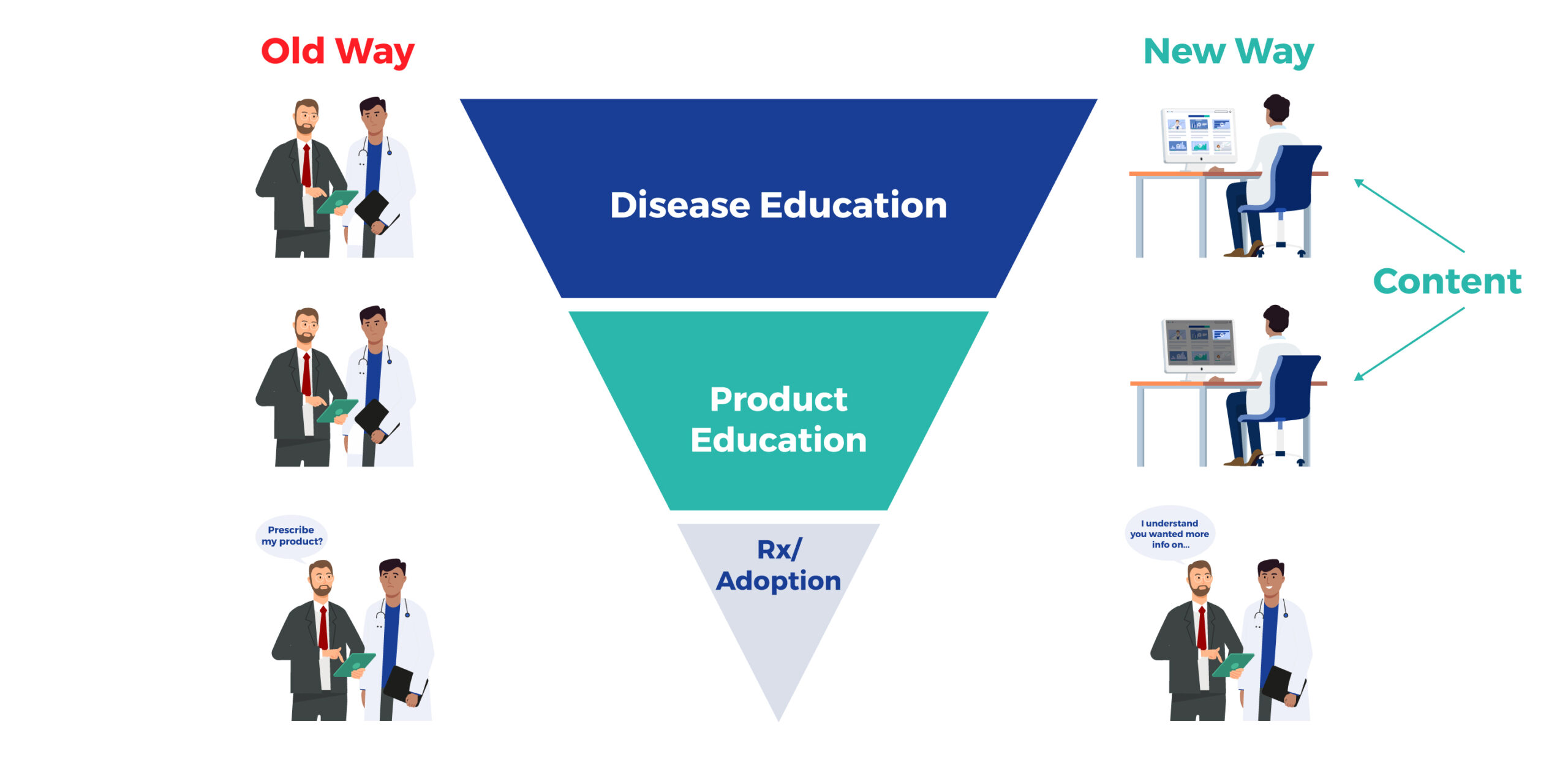
A doctor's journey of discovering new treatments have three main stages. In each of these stages, doctors ask themselves these questions:
- Stage #1: “What’s new in my specialty?” (disease education)
- Stage #2: “How can this new drug X be used in my practice?” (product education)
- Stage #3: “How can I learn more to start using it (co-pays, samples, patient types…)?” (product-usage education)
Before COVID 19, all three stages were driven by sales reps or MSLs (broadly speaking, pharma reps).
After COVID, all of that has changed….The EPG Health Report 2022 says that “only 4% of HCPs consider pharma field force critical in discovering new scientific information…”
Doctors want stages 1 and 2 to be driven by peer-to-peer content, and only after they show interest and build trust in the company, they may opt-in to see a pharma rep and learn more.
In other words, ⅔ of HCP's product adoption journey is now driven by on-demand content.
Reason #3: HCPs Want On-Demand, Bite-Sized, Peer-to-Peer, Personalized Video Content
HCPs are in control and want to engage on their own terms.
What does “engage on their own terms" really mean?
- HCPs want to stay up to date and learn about the new treatments despite being busy and overwhelmed => hence bite-sized, short form content, 3-5 minutes in length
- HCPs want to access the content when they want and how they want => on-demand delivery
- HCPs want the content to come from trusted KOLs => peer-to-peer, KOL authored content
- HCPs (like all of us) live in a visual age and learn better from video than text. In fact, retention of educational content for video vs text is as high as 8X => hence use video, video, video (and some audio formats like podcasts, for the context of driving or exercising).
- HCPs want pharma to provide them with a mix of unbranded and branded content => disease education hubs
- HCPs want the content to find them, as they spent enough time in a lock down during COVID and like all of us, appreciate personalization => Netflix-like, personalized delivery. (“You have a 97% probability of wanting to watch this” and “if you watched this, you want to watch that.”)
In other words, the future is Netflix-like, requiring pharma companies to massively increase the amount of video and audio content in order to access doctors and continue to build trust in their science and products.
This may sound like a lot, and for many traditional pharma executives it is…
However, all of this represents a massive opportunity for pharma companies to differentiate and build their own, “blue ocean” strategy, that stands out and drives successful launches and product adoption.
If you want to learn more about how you have your own, personalized Netflix-like video hub, click below to see if you are eligible.